White-crowned Sparrow
Zonotrichia leucophrys
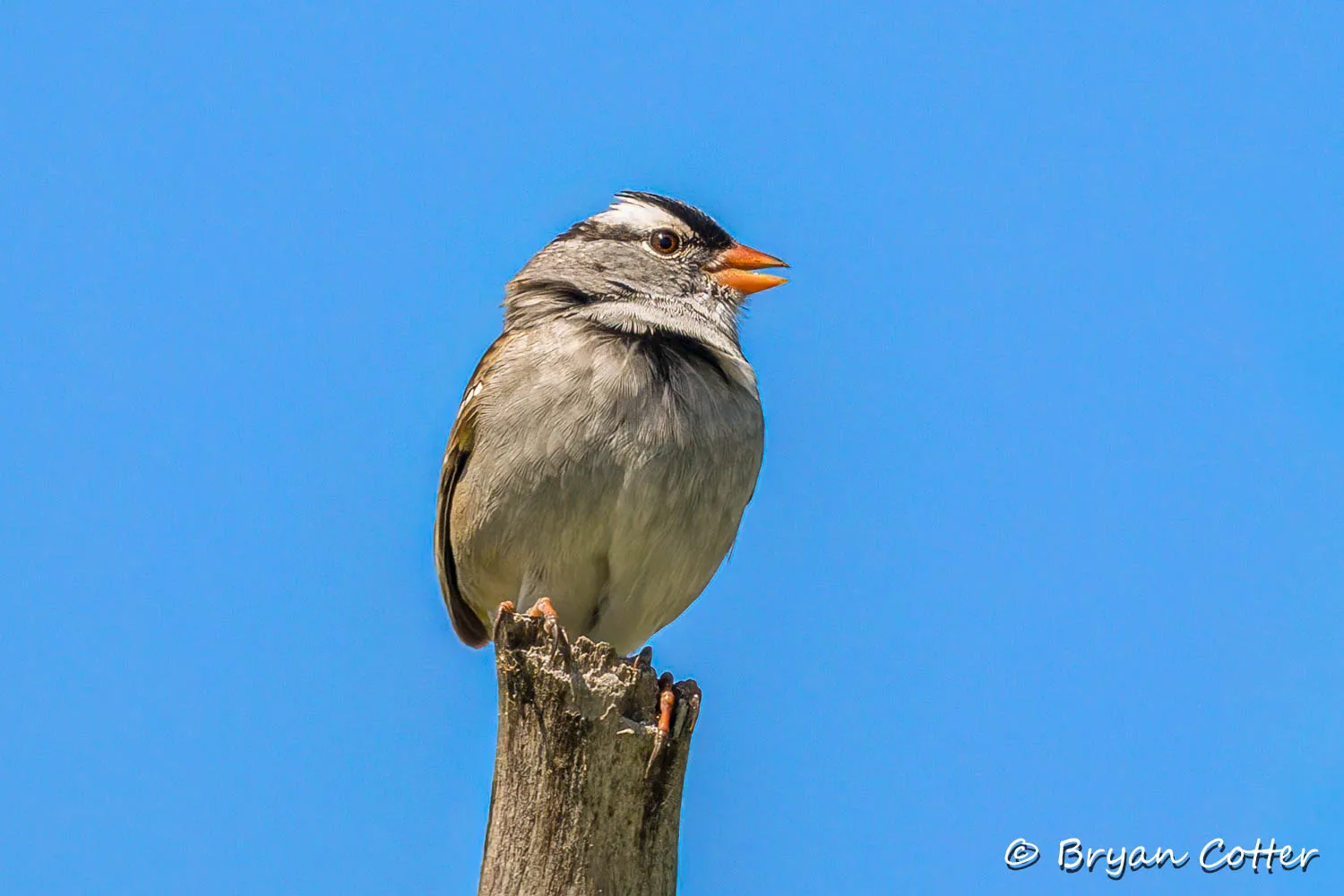
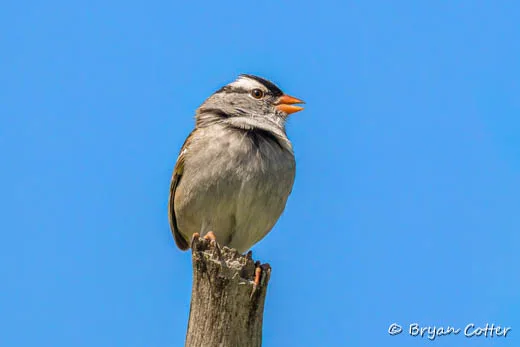
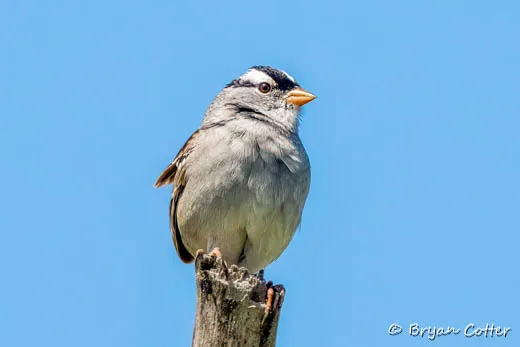

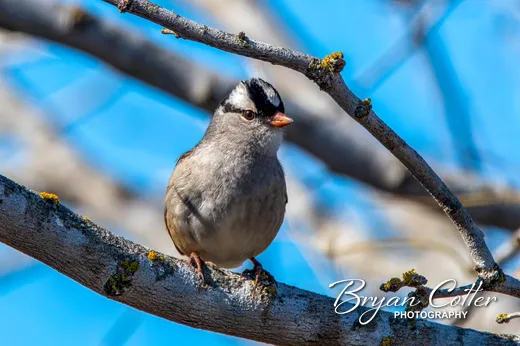


About the White-crowned Sparrow
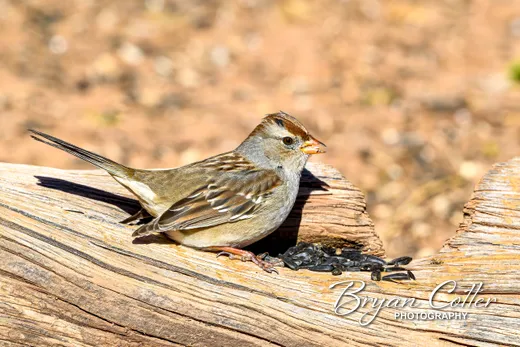
The White-crowned Sparrow arrives in Texas each fall looking like it dressed for an occasion - a big, long-tailed, gray-breasted sparrow with a boldly striped black-and-white crown, a neat pink-orange bill, and an upright, alert posture that stands out in any winter flock. Young birds wear the same pattern in rich brown and tan.
It is a bird of brushy edges and open ground, scratching with double-footed kicks for seeds and picking at winter weeds, always near the thick cover it dives into at the first alarm. Flocks maintain pecking orders, and the crisp adults usually dominate the brown-crowned youngsters at a feeder.
White-crowned Sparrows are a cornerstone species of songbird science: their regional song dialects, learned in the first months of life, have been studied for over half a century, and much of what is known about how birds learn song traces to this species. Some Alaska-breeding birds migrate 2,600 miles to winter, navigating with a precision that returns individuals to the same Texas hedgerow year after year.
In Texas they are common winter birds statewide from October to April, in brushy fencerows, field edges, and yards - whistling fragments of their sweet, wheezy song on warm winter mornings before heading north again.
Join one of my guided birding tours!
© 2026 Bryan Cotter Photography privacy policy terms of use site by cotter designs