Magnolia Warbler
Setophaga magnolia






About the Magnolia Warbler
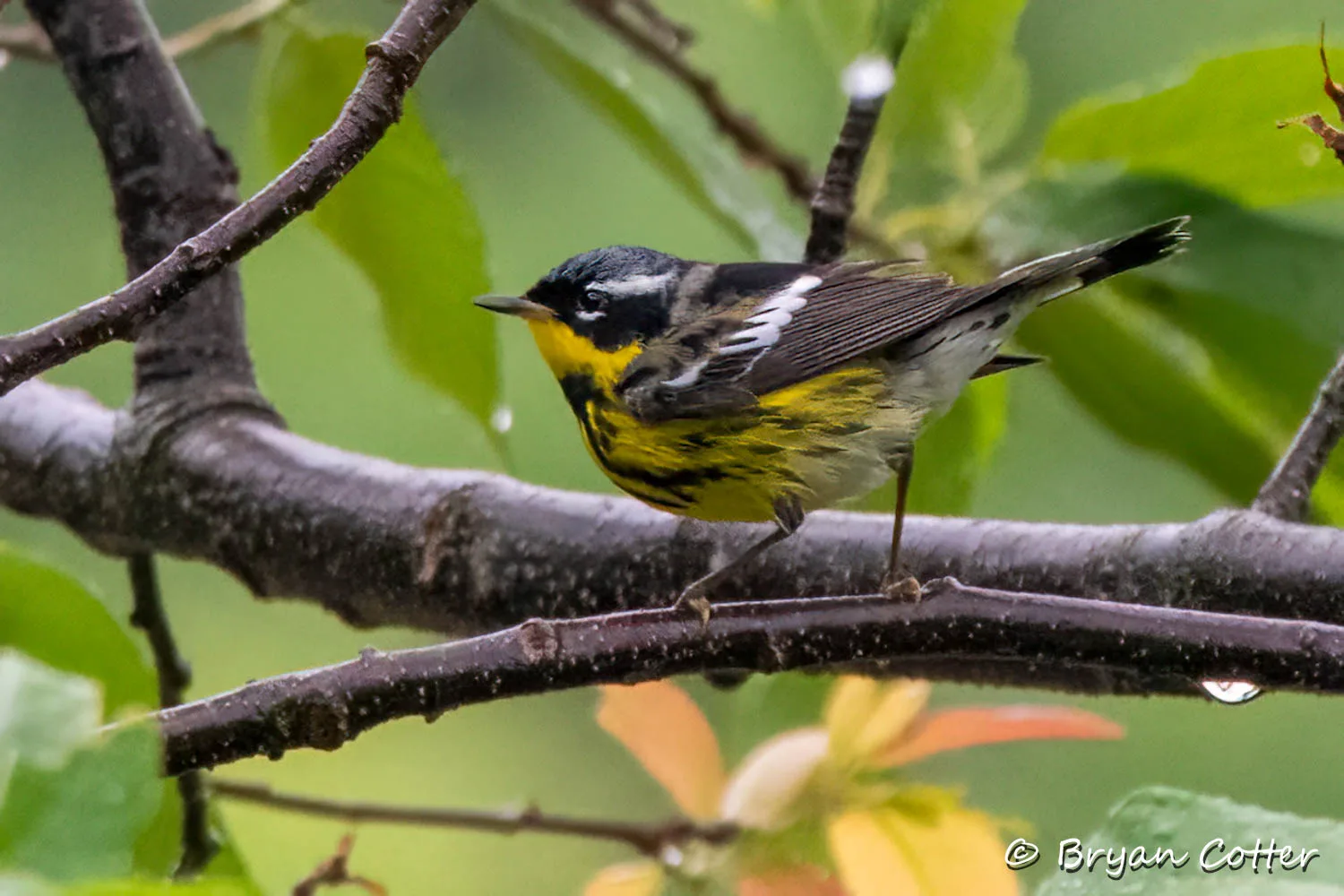
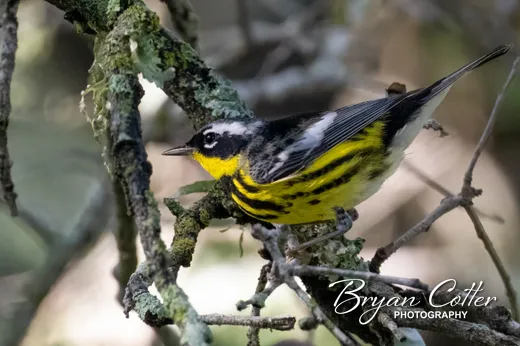
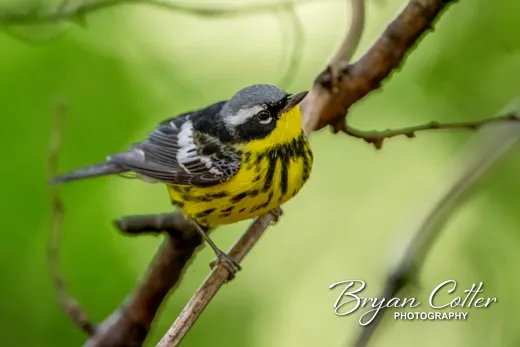
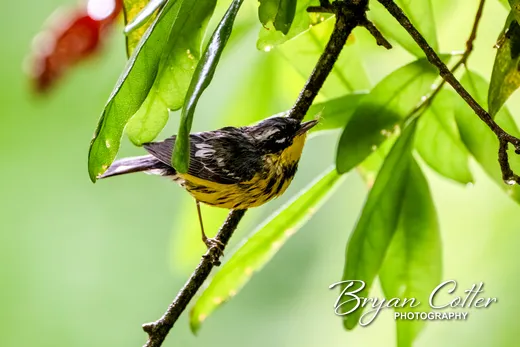
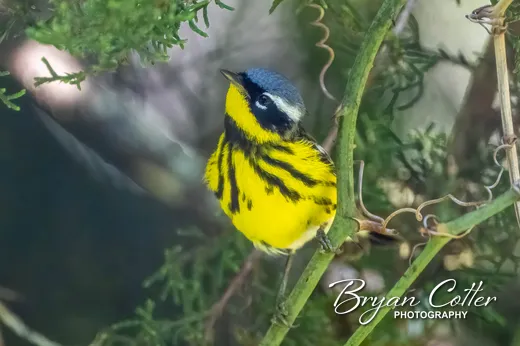
The Magnolia Warbler looks like a field guide plate come to life: gray crown, black mask and back, yellow underparts crossed by a bold black necklace of streaks, white wing patch, and a unique tail pattern - white across the middle with a black terminal band, visible from below whenever the tail fans.
Magnolias breed in young conifer stands across Canada and the northeastern states, nesting low in dense small spruces. They forage actively in the outer foliage at low and middle heights, taking caterpillars and other insects from the undersides of leaves.
Texas gets a generous share in migration, spring and fall, and because they favor low cover, Magnolia Warblers are among the easiest migrant warblers to see well in coastal mottes and inland thickets alike.
Join one of my guided birding tours!
© 2026 Bryan Cotter Photography privacy policy terms of use site by cotter designs