Double-crested Cormorant
Nannopterum auritum

About the Double-crested Cormorant
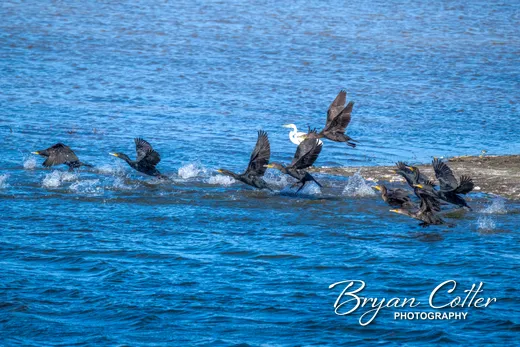
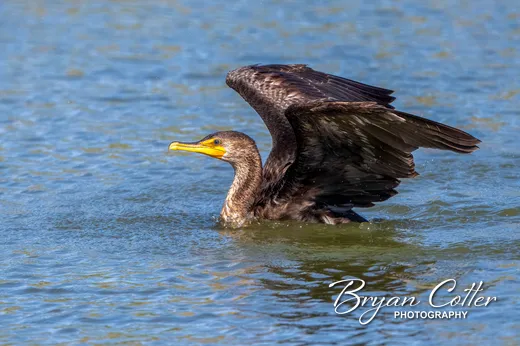
The Double-crested Cormorant is the dark, prehistoric-looking fish-chaser of nearly every Texas lake - a big blackish waterbird with orange facial skin, an emerald eye, and a hooked bill, riding low in the water with its head tilted slightly up, then vanishing in a smooth dive.
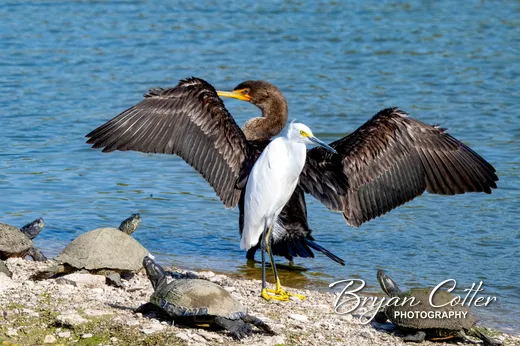
Cormorant feathers wet through by design: less trapped air means less buoyancy, letting the bird pursue fish underwater with powerful webbed-foot strokes. The cost is the family's signature pose - standing on a snag or piling with wings spread to dry, a silhouette unchanged since the age of their ancient relatives. The twin head tufts of the name appear only briefly in spring, and on Texas birds they are often white.
The species' modern history is a rollercoaster: devastated by DDT-era eggshell thinning, cormorants rebounded after 1972 so successfully that they now number in the millions, colonizing reservoirs across the continent - a comeback so complete it generates conflict with aquaculture and sport-fishing interests.
In Texas, Double-cresteds pour in for the winter, stringing across every reservoir, river, and bay from October through April in long wavering flight lines, with some non-breeders lingering all year. The smaller, longer-tailed Neotropic Cormorant shares Texas waters year-round; sorting the two by size, tail length, and the shape of the orange throat skin is a daily exercise for the state's lake-watchers.
Join one of my guided birding tours!
© 2026 Bryan Cotter Photography privacy policy terms of use site by cotter designs