Aoudad
Ammotragus lervia
About the Aoudad
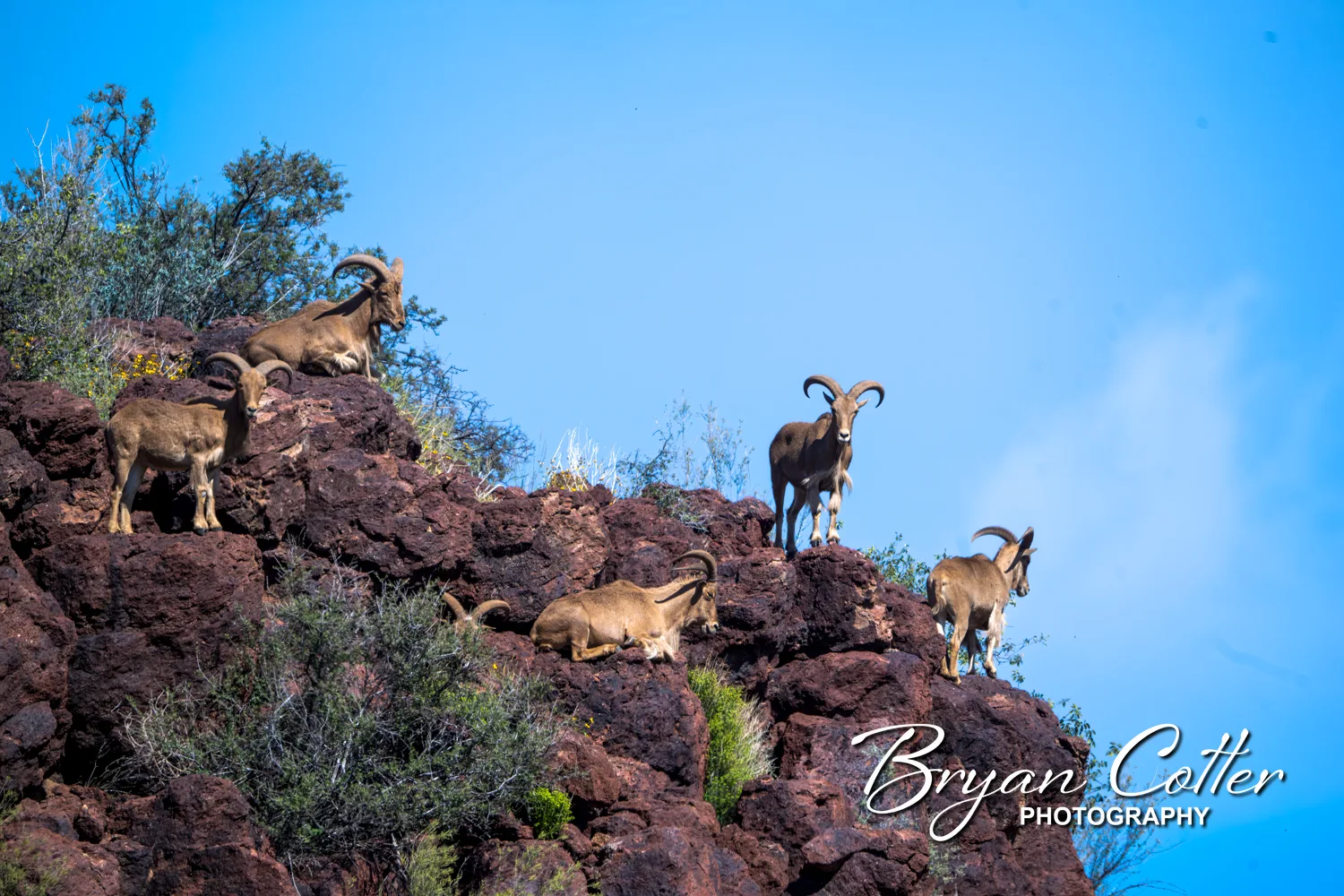
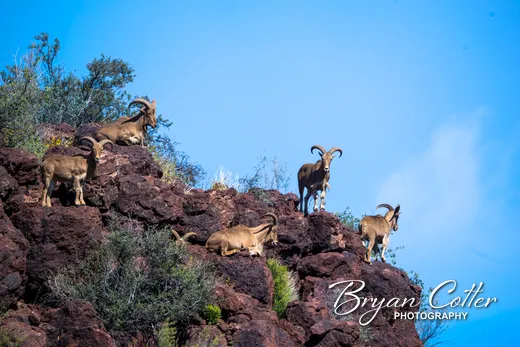
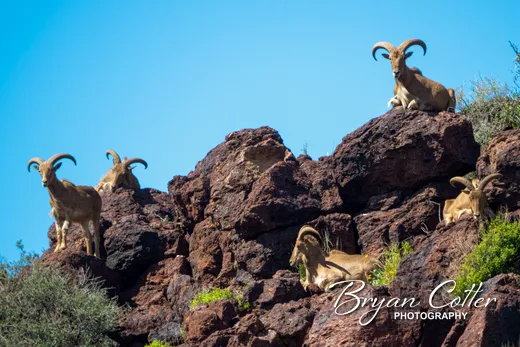
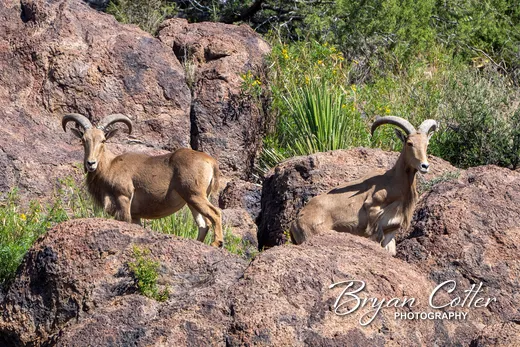
The Aoudad, also called the Barbary sheep, is a wild sheep from the mountains of North Africa. It is a big, sandy-tan animal built for steep rock. Both sexes carry thick horns that curve back and out, and adults have a long fringe of hair hanging from the throat, chest, and front legs. Rams are much bigger than ewes, with heavier horns and a longer fringe.
Aoudad are not native to Texas. Ranchers and hunters released them in the 1950s, first in Palo Duro Canyon in the Panhandle and later in the Trans-Pecos. With no close competitors for their niche and few predators, they spread fast. Today there are tens of thousands of them in the canyons and desert mountains of West Texas, and they are now one of the most visible large mammals along the roads through the Davis Mountains.
Their success is a problem. Aoudad eat much of the same food as the native desert bighorn sheep, use the same water, and can carry diseases that are dangerous to bighorns. Because of this, Texas treats them as an exotic species, and wildlife managers work to keep their numbers down.
These photos were taken in Limpia Canyon along Highway 17 in Jeff Davis County in October 2026.
Join one of my guided birding tours! Fine art prints of my photos are also available.
© 2026 Bryan Cotter Photography camera gear privacy policy terms of use site by cotter designs