Yellow Mud Turtle
Kinosternon flavescens
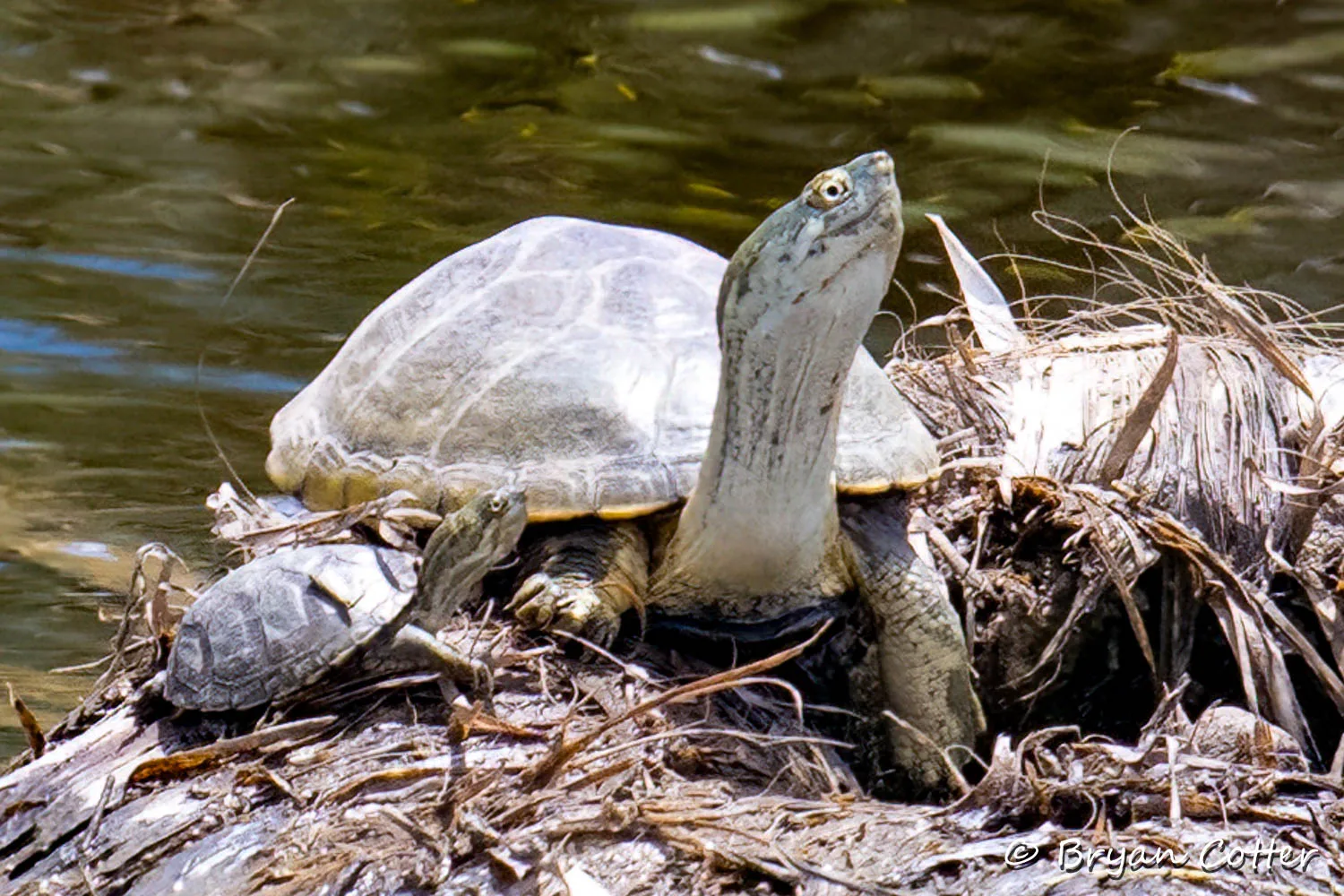
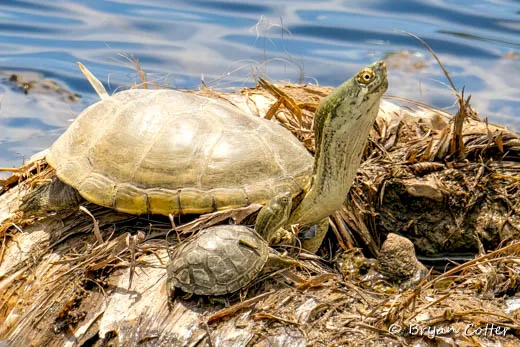
About the Yellow Mud Turtle
The Yellow Mud Turtle is a small, plain turtle with a big survival trick. Olive-brown above with a yellowish throat and chin, smooth-shelled and rarely more than five or six inches long, it lives in the muddy, fish-free waters most turtles ignore - cattle tanks, playa lakes, ditches, and temporary ponds of the plains.
Its specialty is disappearance. When ponds dry - as playa country ponds always do - the turtle digs down and estivates in the earth, sometimes for many months, waiting out drought in a sealed chamber until rain refills its world. Much of its life is spent underground; some northern populations pass more time buried than swimming.
Yellow Mud Turtles eat almost anything aquatic - insects, worms, tadpoles, snails, carrion - foraging by walking the bottom rather than swimming open water. Handled, they can release a musky odor that earns mud turtles the old nickname "stinkpot cousins".
In Texas the species ranges through the western half of the state, from the Panhandle playas through the Trans-Pecos and into the Hill Country's stock-tank country. A small dark head periscoping in a cow pond that held no water two months ago is very likely this quiet specialist.
Join one of my guided birding tours!
© 2026 Bryan Cotter Photography privacy policy terms of use site by cotter designs